
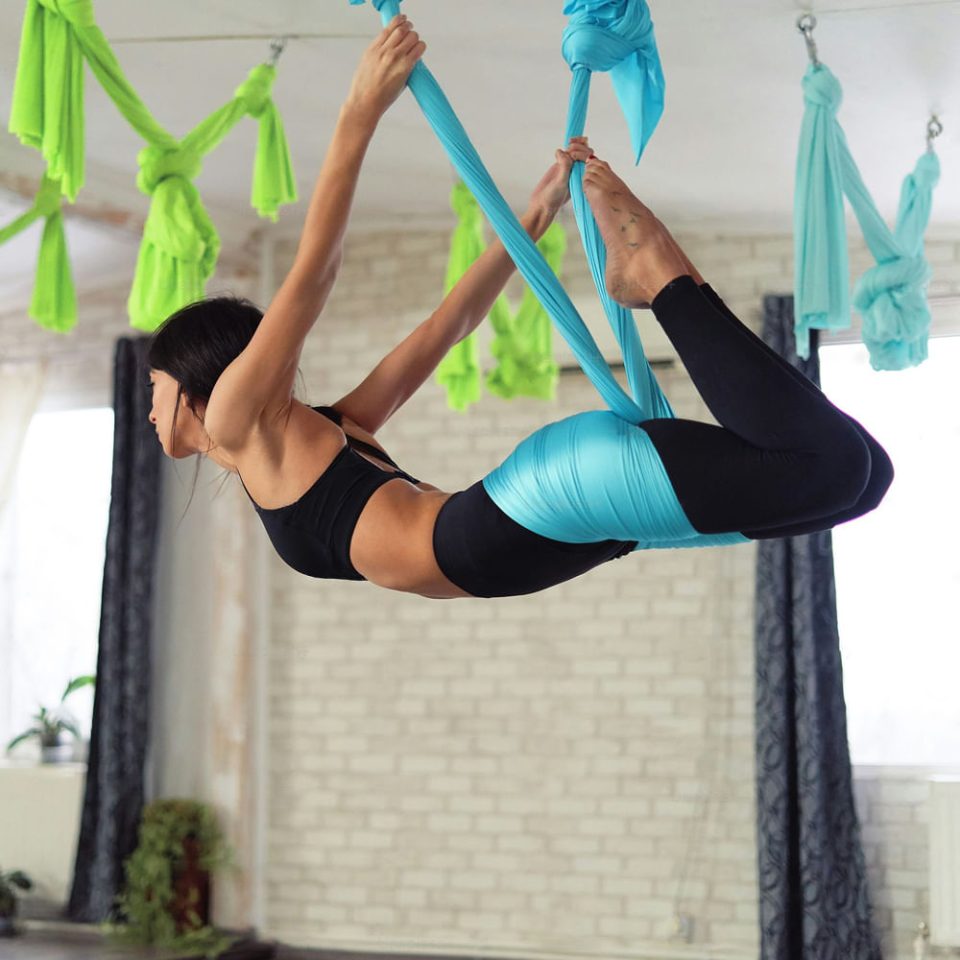
Workplace wellness in Singapore has undergone a significant transformation over the past decade. What was once considered a nice-to-have perk, a fruit basket in the pantry or a subsidised gym membership, has become a strategic priority for organisations competing for talent, managing healthcare costs, and addressing the very real productivity consequences of employee burnout. The most forward-thinking HR directors and wellness coordinators in Singapore are no longer satisfied with passive wellness offerings. They are seeking movement-based, psychologically engaging, and genuinely differentiated experiences that deliver measurable value to the workforce. Aerial yoga has emerged as one of the more compelling additions to Singapore’s corporate wellness landscape, and understanding why requires looking beyond the novelty factor to the underlying workforce health data.
The Business Case for Active Corporate Wellness
The cost of employee stress, burnout, and disengagement to Singapore businesses is substantial. Research consistently shows that presenteeism, being physically present at work while mentally disengaged or suffering from health-related impairment, costs organisations significantly more than absenteeism. Employees dealing with chronic stress, musculoskeletal pain, and anxiety are not absent from work more often than their healthier colleagues; they simply perform at a fraction of their potential while present.
Singapore’s Ministry of Manpower data and independent workforce health surveys have consistently highlighted stress, sedentary behaviour, and musculoskeletal conditions as the three leading health-related productivity drains in the local workforce. A corporate wellness programme designed to address all three simultaneously, rather than separately, offers compounding value that single-modality programmes cannot match.
Aerial yoga addresses all three. It is a movement-based practice that directly counters sedentary behaviour. Its spinal decompression and core strengthening properties address musculoskeletal health, particularly relevant for desk-based workers. And its neurological effects on the parasympathetic nervous system, cortisol regulation, and psychological resilience directly address workplace stress.
Why Conventional Corporate Wellness Falls Short
The most common corporate wellness offerings in Singapore include employee assistance programmes, discounted gym memberships, step-count challenges, mindfulness app subscriptions, and occasional lunch-and-learn health talks. These offerings are not without value, but they share a critical limitation: they rely almost entirely on employee self-motivation to deliver outcomes.
A gym membership only benefits the employee who uses it. A mindfulness app only works for the employee who opens it. Step challenges engage the already-active. These approaches deliver the most value to the employees who need them least, while the burnt-out, chronically sedentary, high-stress employees they are most intended to help remain disengaged.
Group-based, facilitated movement experiences, including aerial yoga, sidestep this problem because they provide a structured, time-bounded, socially-scaffolded wellness experience. The employee does not need to be intrinsically motivated to exercise. They attend a session, they engage with an instructor and colleagues, and the physiological benefits occur as a natural result of the activity.
The Team Dynamics Dimension
Aerial yoga as a group corporate activity delivers something that most wellness interventions cannot: genuine team-building value grounded in shared physical experience. The novelty and mild challenge of the aerial yoga environment create conditions where colleagues encounter each other outside their professional roles and performance identities.
The hammock environment is naturally levelling. The financial analyst who runs marathons does not necessarily find aerial yoga easier than the senior manager who has not exercised in years. This shared vulnerability and shared challenge create psychological safety and social bonding that conventional team-building activities, with their competitive games and facilitated discussions, often fail to achieve.
Research on social bonding through synchronised physical movement shows that coordinated movement increases trust, reduces interpersonal friction, and improves collaborative behaviour in subsequent work contexts. A team that has laughed together in an aerial yoga session, that has supported and encouraged each other through unfamiliar physical challenge, returns to the office with a meaningfully different relational quality.
Stress Reduction and Its Direct Productivity Impact
Chronic stress impairs cognitive function in specific, measurable ways. It reduces working memory capacity, narrows attentional focus, impairs creative problem-solving, and increases the rate of decision-making errors. For Singapore’s knowledge economy workers, these are not abstract concerns. They are the daily functional costs of operating under sustained pressure.
Aerial yoga’s stress reduction mechanisms, including parasympathetic nervous system activation, vagus nerve stimulation, and cortisol regulation, work at a physiological level that is not subject to the employee’s conscious effort or attitude. An employee who walks into a corporate aerial yoga session feeling sceptical walks out with measurably lower physiological stress markers. This is not motivational. It is biological.
Companies that integrate quarterly or monthly aerial yoga sessions into their wellness calendar create recurring physiological resets for their workforce. The cumulative benefit to cognitive function, decision quality, and interpersonal behaviour over a twelve-month programme is significant and measurable through standard employee wellbeing assessments.
Musculoskeletal Health and the Desk Worker Population
Singapore’s workforce is dominated by service and knowledge sector roles that involve prolonged sitting, extended screen use, and the postural consequences of both. Neck pain, shoulder tension, lower back pain, and carpal tunnel syndrome are endemic in Singapore’s office population. These conditions are not merely uncomfortable. They generate significant healthcare costs, reduce work output, and over time contribute to long-term disability claims.
Aerial yoga’s spinal decompression, thoracic mobility work, and deep core activation address the most common musculoskeletal consequences of desk work directly. The traction provided by hammock-based inversions decompresses the discs that are chronically loaded by prolonged sitting. The shoulder-opening sequences counteract the forward rounding that prolonged computer use creates. The core strengthening that results from hammock-based practice builds the deep stabilising muscles that protect the lumbar spine during extended periods of sitting.
For HR managers building a business case for aerial yoga inclusion in a corporate wellness programme, the potential reduction in musculoskeletal-related sick leave and physiotherapy claims represents a concrete, quantifiable return on the wellness investment.
Structuring a Corporate Aerial Yoga Programme
For companies in Singapore interested in incorporating aerial yoga into their wellness offering, the most common programme structures include:
- Quarterly wellness day activities where aerial yoga is one of a rotating set of movement experiences offered to employees
- Monthly group bookings at a studio facility, offered as a subsidised or fully covered employee perk accessible to interested staff
- Annual wellness retreat components where aerial yoga forms part of a broader day programme combining movement, nutrition education, and mental health content
- Department-level team experiences, particularly useful for teams undergoing high-stress project cycles or post-project recovery periods
- Dedicated corporate wellness partnerships with an aerial yoga studio, providing priority booking, customised class formats, and instructor-led programmes designed around the company’s specific workforce health priorities
Each of these structures can be tailored to company size, wellness budget, and workforce profile. A financial services firm with a high-pressure desk-based workforce may prioritise the stress reduction and musculoskeletal benefits in their programme design. A creative agency may emphasise the play, self-efficacy, and flow state benefits. A logistics company may focus on physical recovery and body maintenance for staff who combine desk work with physically demanding site visits.
Return on Investment: Making the Numbers Work
Senior leadership approval for wellness investment typically requires a credible return on investment narrative. The ROI of corporate wellness programmes is well-established in the research literature, with studies consistently showing returns of between two and six dollars for every dollar invested in comprehensive employee wellness, primarily through reduced absenteeism, lower healthcare utilisation, and productivity gains.
For aerial yoga specifically, the ROI case rests on three pillars. First, the activity delivers genuine, measurable health benefits rather than simply being a participation exercise, ensuring that the wellness spend translates to actual physiological outcomes. Second, its group-based, facilitated format achieves higher engagement rates than self-directed wellness tools, improving programme utilisation and therefore return. Third, its differentiation value supports talent attraction and retention narratives, particularly relevant in Singapore’s competitive talent market where employer value proposition increasingly includes the quality and thoughtfulness of wellness offerings.
Positioning Aerial Yoga Within a Broader Wellness Strategy
Aerial yoga is not a comprehensive wellness strategy on its own. It is most effective when positioned as one high-quality, high-engagement component within a broader wellness calendar that also addresses nutrition, sleep quality, mental health support, and preventive health screening.
The role aerial yoga plays within that broader strategy is to provide a movement experience that is simultaneously physically effective, psychologically engaging, and socially bonding, qualities that few other single wellness activities combine. Used strategically and communicated well internally, it signals to employees that the company’s wellness investment is thoughtful, experiential, and genuinely interested in their wellbeing rather than simply ticking a compliance box.
For companies in Singapore looking to explore corporate wellness partnerships or group bookings for their team, Yoga Edition offers professional, experienced guidance on designing aerial yoga experiences that work for corporate groups of varying sizes and fitness backgrounds.
Frequently Asked Questions
Q: What is the minimum group size for a corporate aerial yoga booking at a studio in Singapore? A: Most aerial yoga studios accommodate corporate groups based on their studio capacity, which is determined by the number of hammocks available. Typical aerial yoga studio capacities in Singapore range from six to fifteen practitioners per session. For larger teams, multiple sessions on the same day or across consecutive days can be arranged. It is best to contact the studio directly to discuss group size and scheduling flexibility.
Q: Do employees need prior aerial yoga experience to participate in a corporate wellness session? A: No prior experience is required for a well-structured introductory corporate aerial yoga session. A competent instructor will deliver a session appropriately scaffolded for first-time participants, ensuring that the physical demands are accessible while still providing a meaningful, enjoyable experience. The focus in corporate wellness sessions is typically on accessible, enjoyable movement rather than advanced aerial technique.
Q: How should HR managers address employee concerns about physical safety before a corporate aerial yoga session? A: Pre-session communication should clearly describe what the session involves, confirm that it is suitable for all fitness levels, specify any genuine contraindications (such as recent surgery or pregnancy), and emphasise that participation is entirely voluntary in terms of the specific poses each individual attempts. Allowing employees to review the studio’s safety credentials and instructor qualifications in advance also helps address safety concerns.
Q: Can aerial yoga corporate sessions be customised to focus on specific wellness outcomes, such as stress reduction only? A: Yes. Experienced aerial yoga instructors can design sessions that emphasise particular wellness outcomes. A session focused on stress reduction and nervous system regulation would prioritise restorative aerial poses, supported inversions, and the hammock cocoon, with less emphasis on strength and dynamic movement. Discussing the company’s specific wellness objectives with the studio allows for a tailored programme design.
Q: How does aerial yoga compare to corporate chair yoga or conventional office stretch programmes in terms of ROI? A: Chair yoga and office stretch programmes have value as low-barrier, high-frequency wellness touchpoints. However, their physiological depth is limited by the constraints of the office environment. Aerial yoga, as a dedicated studio experience, delivers significantly greater physiological impact per session because it combines spinal decompression, full-body muscle engagement, nervous system regulation, and social bonding in ways that chair-based programmes cannot replicate. The higher engagement and perceived value also translate to stronger employee satisfaction and programme utilisation metrics.