
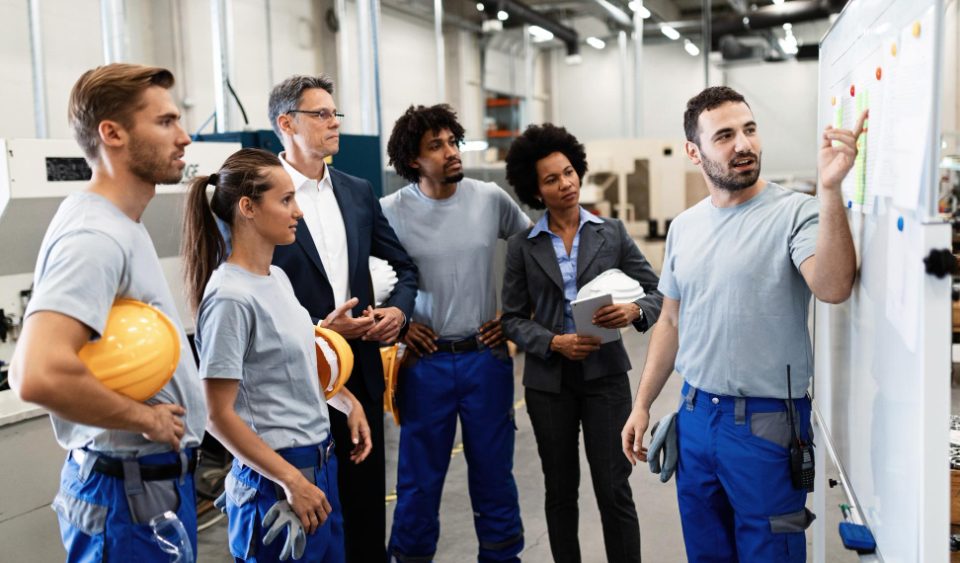
Industrial performance relies on far more than cutting-edge machinery, automated assembly lines, and advanced enterprise software. Even the most sophisticated manufacturing equipment and digital control architectures produce sub-optimal results when operators, technicians, and floor supervisors lack the skills to run, maintain, and optimize those systems. Workforce training serves as the operational bridge connecting high-cost capital investments to measurable factory floor productivity.
Modern industrial environments face rapid technological iteration, strict regulatory frameworks, and chronic technical labor shortages. Comprehensive workforce development programs eliminate production bottlenecks, reduce material waste, elevate workplace safety records, and protect enterprise profit margins. Organizations that invest systematically in structured upskilling transform their shop floor workforce from an operational expense into an enduring competitive advantage.
Reducing Operational Downtime and Enhancing Equipment Reliability
Unscheduled equipment downtime is one of the most expensive drains on industrial profitability. When machinery stops unexpectedly, entire production schedules collapse, order delivery timelines slip, and labor costs accumulate without corresponding output. A well-trained technical workforce mitigates these failures directly at the machine interface.
Total Productive Maintenance and Autonomous Care
Autonomous maintenance training empowers front-line equipment operators to conduct basic daily upkeep, including lubrication, tension checks, cleaning, and sensor calibration. Rather than waiting passively for an external maintenance crew when minor anomalies arise, trained operators identify early warning signs of equipment degradation before a catastrophic failure occurs.
-
Early Detection of Mechanical Wear: Technicians trained in acoustic, thermal, and vibration baselines spot bearing fatigue and belt misalignment during standard shifts.
-
Streamlined Maintenance Handoffs: Operators learn to log precise diagnostic data into computerized maintenance management systems, cutting the repair time required by specialized mechanics.
-
Extended Mean Time Between Failures: Consistent daily upkeep directly lengthens the operating lifespan of heavy industrial assets and reduces reliance on emergency parts procurement.
Rapid Troubleshooting and Root Cause Resolution
When machine stoppages happen, the speed of diagnosis determines the financial impact. Training employees in structured problem-solving frameworks, such as the five whys and fishbone diagramming, prevents temporary surface-level workarounds. Front-line workers learn to diagnose electrical, hydraulic, and pneumatic faults systematically, applying durable mechanical corrections that prevent repeat breakdowns.
Improving Product Quality and Minimizing Material Waste
Scrap and rework costs erode manufacturing margins quietly. Flawed setups, incorrect machine speeds, and delayed defect detection generate thousands of dollars in wasted raw materials. Structured workforce training embeds quality control directly into every stage of the manufacturing workflow.
Statistical Process Control and Real-Time Inspection
Industrial training programs teach operators how to interpret control charts, understand standard deviations, and recognize natural process variation versus assignable cause anomalies. Armed with this knowledge, operators adjust machine tolerances, tooling feeds, and temperature settings before parts drift out of engineering compliance.
-
Lower First-Pass Scrap Rates: Precision calibration training ensures raw stock is cut, stamped, molded, or machined correctly on the first attempt.
-
Standardized Work Instructions: Training enforces strict adherence to documented assembly standards, eliminating individual procedural variations that introduce product defects.
-
Reduced In-Process Rework: Catching dimension errors immediately at upstream workstations eliminates the expensive labor hours needed to disassemble and correct downstream sub-assemblies.
Lean Manufacturing and Waste Elimination
Workforce development built around lean principles teaches personnel to identify and eliminate non-value-added activities, including excess motion, material overprocessing, unnecessary transport, and staging bottlenecks. Operators actively redesign their physical workstations to streamline tool access, optimize part placement, and accelerate cycle times.
Strengthening Safety Culture and Regulatory Compliance
Industrial workplaces present serious hazards, including high-voltage systems, hazardous chemicals, heavy suspended loads, and fast-moving automated equipment. Comprehensive safety training protects human life while shielding the company from severe regulatory fines, litigation expenses, and skyrocketing insurance premiums.
Hazard Identification and Mitigation
Proactive safety training shifts worker mindset from reactive compliance to situational hazard prevention. Employees learn to conduct thorough Job Safety Analyses before starting non-routine operations, verifying mechanical lockout and tagout procedures, inspect personal protective equipment, and audit emergency shutoff mechanisms.
-
Reduction in Lost-Time Incidents: Proper lifting mechanics and ergonomic training significantly reduce soft-tissue injuries, repetitive strain claims, and chronic musculoskeletal absenteeism.
-
Safe Chemical and Hazardous Material Handling: Standardized training in chemical storage, hazardous waste disposal, and emergency spill containment protects both worker health and environmental compliance.
-
Incident Root-Cause Reporting: Educating the workforce to report near-misses without fear of reprisal allows safety directors to fix structural hazards before an injury occurs.
Compliance and Audit Readiness
Industrial facilities face strict oversight from regional safety, health, and environmental regulatory bodies. Continuous training ensures all operators maintain active certifications for specialized equipment, such as overhead cranes, industrial forklifts, and pressure vessels. Digital training logs create clear, transparent audit trails that simplify regulatory inspections and eliminate non-compliance penalties.
Accelerating the Adoption of Advanced Industry Technologies
The modern manufacturing sector is undergoing rapid digitization, characterized by collaborative robotics, artificial intelligence vision systems, industrial internet of things sensors, and automated guided vehicles. Installing this technology delivers zero return if the workforce cannot interact with it effectively.
Human-Machine Interface Competence
Upskilling transforms manual machine operators into digital system controllers. Training programs teach floor workers how to navigate modern touchscreen human-machine interfaces, interpret real-time telemetry dashboards, and calibrate optical vision sensors. This digital literacy reduces setup times when shifting between different product runs on flexible manufacturing lines.
Bridging the Technical Skills Deficit
As experienced senior technicians retire, industrial enterprises face a massive loss of institutional knowledge. Structured training and apprenticeship programs capture this veteran expertise, converting undocumented tacit knowledge into formal, repeatable curricula. Cross-training employees across multiple disciplines, such as electrical, mechanical, and programmable logic controller maintenance, creates a flexible workforce capable of adapting to unexpected staffing shortages.
Maximizing Workforce Retention and Employee Engagement
High employee turnover damages industrial performance by introducing continuous operational instability, lowering team morale, and draining training resources. A clear commitment to employee career advancement through structured technical education directly stabilizes workforce retention.
-
Clear Career Pathways: Structured apprenticeship and certification tiers show workers a transparent path from entry-level material handlers to master technicians and floor supervisors.
-
Increased Operator Autonomy: When workers possess the skills to solve mechanical problems independently, their sense of ownership and daily job satisfaction rises significantly.
-
Lower Recruitment and Onboarding Overhead: Retaining skilled operators avoids the substantial expense of recruiting, vetting, and onboarding new staff in competitive labor markets.
Frequently Asked Questions
What are the most effective metrics for measuring the return on investment of an industrial training program?
The return on investment of industrial training is measured by tracking operational key performance indicators before and after program delivery. Critical metrics include changes in overall equipment effectiveness, mean time to repair, first-pass yield rates, total scrap volume, lost-time injury rates, and the speed of product line changeovers.
How does on-the-job training compare with simulated or classroom-based industrial training?
Classroom education builds conceptual understanding of mechanical principles, safety regulations, and statistical control methods. On-the-job training provides hands-on familiarity with specific machinery. Modern facilities balance both by integrating digital simulators and virtual reality modules, allowing workers to practice hazardous procedures and complex machine setups without risking physical injury or pausing active production lines.
What is cross-training, and why is it vital in modern industrial plants?
Cross-training involves teaching employees to perform multiple distinct roles across different workstations, departments, or machine types. It ensures the plant remains fully operational during unexpected employee absences, enables rapid reallocation of labor during production volume spikes, and prevents repetitive task fatigue among operators.
How often should industrial safety and technical training programs be updated?
Foundational safety and compliance certifications typically require annual refreshers under regulatory mandates. Technical operational training should be reviewed and updated whenever new machinery is installed, significant engineering change orders occur, software versions update, or internal quality audits reveal emerging defect patterns.
How can manufacturers overcome resistance to new training programs from veteran workers?
Overcoming resistance requires involving experienced workers directly in curriculum development, recognizing their deep domain expertise, and framing training as modernization rather than a critique of past performance. Appointing veteran operators as peer mentors and connecting successful program completion to tangible compensation tiers or career advancement incentives also accelerates buy-in.
What role do Standard Operating Procedures play in enterprise workforce training?
Standard Operating Procedures serve as the foundational baseline for all technical training. They document the exact, step-by-step methodologies required to execute tasks safely, efficiently, and with zero defects. Without clear, validated, and up-to-date procedures, workforce training becomes inconsistent, relying on individual habits rather than standardized engineering best practices.
How can mid-sized manufacturers with limited budgets build comprehensive training programs?
Mid-sized manufacturers can optimize training budgets by leveraging state-sponsored workforce development grants, partnering with local technical colleges for apprenticeship pipelines, and using modular digital learning platforms. Capturing internal subject matter expertise on video to create reusable training modules allows smaller plants to build high-quality technical libraries at minimal cost.