
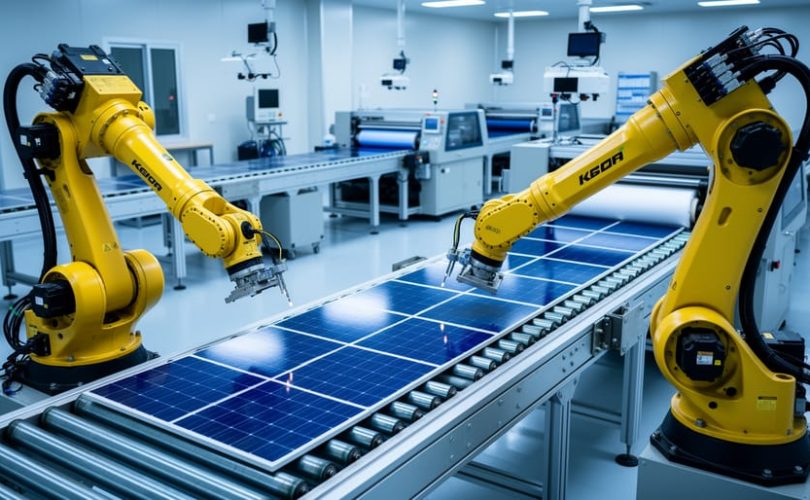
Industrial manufacturing has moved beyond the era of rigid, single-purpose machinery operated by static assembly lines. Modern manufacturing facilities face volatile consumer demand, compressed product lifecycles, and persistent labor shortages that traditional automation simply cannot manage. Industrial robotics has emerged as the definitive solution to these operational challenges, transforming factories from mechanical production spaces into adaptable, data-driven ecosystems.
The convergence of advanced robotics, machine vision, edge computing, and artificial intelligence allows manufacturers to achieve unprecedented levels of precision, speed, and operational uptime. By shifting human labor away from repetitive and hazardous manual tasks, modern robotics platforms reduce production costs, virtually eliminate assembly defects, and provide the operational flexibility required to compete in a fast-paced global economy.
The Evolution of Industrial Automation
Traditional industrial automation relied on stationary robotic arms programmed to execute identical physical trajectories in isolation. These machines delivered high output volume but lacked sensory perception, requiring complete physical recaging to protect human workers and weeks of downtime whenever tooling or parts changed.
The current generation of industrial robotics operates on flexible, perception-driven architectures that reshape the factory floor.
-
Autonomous Mobile Robots: Rather than following magnetic floor strips or fixed conveyor belts, autonomous mobile robots navigate dynamic factory environments using onboard lidar, optical cameras, and spatial mapping algorithms to transport materials between workstations on demand.
-
Collaborative Robots: Built with integrated force-torque sensors and compliant joints, collaborative robots operate side-by-side with human workers without physical safety barriers, pausing instantly when touching an unexpected object or person.
-
Articulated High-Payload Arms: Modern multi-axis robotic arms feature advanced motion control algorithms that compensate for mechanical deflection and vibrations in real time, handling heavy sheet metal or industrial castings with sub-millimeter positioning accuracy.
Precision Engineering and Defect Reduction in High-Speed Assembly
Human operators, while versatile, experience fatigue, visual strain, and physical variability over long production shifts. Industrial robotics delivers consistent, sub-millimeter precision across continuous operating cycles, making automation essential in complex sectors like semiconductor fabrication, aerospace manufacturing, and electronics assembly.
Machine Vision and Automated Optical Inspection
Integrating multi-spectrum cameras and artificial intelligence vision systems directly onto robotic end-effectors transforms standard pick-and-place arms into active quality control checkpoints. As components travel down the assembly line, high-speed vision systems analyze microscopic surface finishes, solder joint integrity, and component alignment in milliseconds. Robots automatically reject non-conforming parts or adjust their grip pressure dynamically, preventing defective sub-assemblies from progressing through the production pipeline.
Adaptive Material Handling and Dispensing
Automated dispensing robots apply industrial adhesives, thermal pastes, and structural sealants with exact volumetric control and trajectory precision. By monitoring fluid viscosity, ambient temperature, and substrate contours in real time, robotic dispensers eliminate material waste, ensure consistent bonding strength, and maintain environmental seals that meet strict regulatory and safety standards.
Enhancing Workplace Safety and Workforce Productivity
Manufacturing involves inherently dangerous working conditions, including heavy load handling, extreme thermal environments, toxic fumes, and repetitive strain hazards. Deploying robotics into hazardous production environments protects human workers while maximizing overall factory productivity.
-
Hazardous Environment Isolation: Robots take over high-risk applications like high-voltage battery pack assembly, foundries, industrial paint booths, and chemical handling stations, removing personnel from toxic exposures and extreme heat.
-
Ergonomic Strain Elimination: Automated systems handle repetitive heavy lifting, palletizing, and awkward overhead assembly tasks, significantly reducing workplace musculoskeletal disorders, worker compensation claims, and long-term absenteeism.
-
Workforce Upskilling: The integration of robotics elevates factory floor roles from manual operators to robotics technicians, maintenance specialists, and automation programmers, creating higher-value, technically skilled jobs within industrial communities.
Agile Manufacturing and High-Mix, Low-Volume Production
Historically, automation was only cost-effective for mass production runs of uniform items. Today, shifting consumer preferences require factories to pivot rapidly between varying product variants, a manufacturing model known as high-mix, low-volume production. Modern robotics delivers the agility needed to support this model economically.
Rapid Tooling and Software Reconfiguration
Advanced robotic systems incorporate quick-change modular end-effectors, allowing a single robotic workstation to switch between mechanical grippers, spot-welding tips, laser cutters, and screwdriving tools within seconds. Tool path programming that once took days of manual teach-pendant manipulation is now executed in digital software environments using three-dimensional computer-aided design files, allowing production lines to transition between distinct product variants with near-zero downtime.
Digital Twins and Simulation-Driven Deployment
Before deploying a robotic cell on the factory floor, engineers design, simulate, and stress-test the entire physical setup inside a virtual digital twin environment. These physics-based simulations calculate exact cycle times, identify potential kinematic collisions, and balance workload distributions across multi-robot cells. Virtual validation accelerates real-world deployment timelines, minimizes commissioning expenses, and prevents costly design oversights.
Predictive Maintenance and Real-Time Telemetry
Modern industrial robots operate as high-density data hubs, continuously monitoring their own mechanical and electrical health. Every joint actuator, servo motor, and gearbox generates continuous operational telemetry that informs plant-wide maintenance strategies.
-
Vibration and Thermal Monitoring: Accelerometers and thermal sensors embedded within robotic joints detect anomalous vibrations, bearing wear, and lubricant degradation weeks before a physical breakdown occurs.
-
Dynamic Energy Optimization: Industrial robotics controllers analyze operational motion profiles, decelerating movements during non-critical production phases to reduce peak power demand and lower factory electricity costs.
-
Proactive Component Replacement: Plant managers schedule maintenance interventions during scheduled shift changeovers rather than enduring unexpected line stoppages, dramatically extending the operating life of industrial assets.
Frequently Asked Questions
How do collaborative robots differ mechanically from traditional industrial robots?
Collaborative robots are engineered with lightweight materials, rounded joints, internal torque sensors, and limited motor power to ensure they cannot deliver high-impact forces to adjacent workers. Traditional industrial robots utilize heavy steel structures, high-power servomotors, and rigid gear trains optimized purely for maximum payload capacity and acceleration, requiring protective safety fencing to ensure worker safety.
What is the typical return on investment timeline for an industrial robotics deployment?
Most industrial robotics deployments achieve full return on investment within twelve to twenty-four months. This payback timeline is accelerated by direct labor cost savings, reduced raw material scrap rates, expanded production capacity via continuous operating shifts, and lower warranty costs due to higher assembly precision.
How does edge computing improve the performance of industrial robotic arms?
Edge computing processes sensor and vision data directly on local industrial controllers rather than sending high-bandwidth data to centralized cloud servers. This local processing delivers low-latency response times measured in milliseconds, which is critical for real-time trajectory adjustments, collision avoidance, and high-speed quality inspections.
What are the primary barriers mid-sized manufacturers face when adopting robotics?
The main barriers include initial capital expenditure requirements, a lack of in-house technical personnel capable of programming and maintaining robotic hardware, integration challenges with legacy factory equipment, and difficulty selecting the right automation applications for low-volume production environments.
How do autonomous mobile robots safely navigate busy production environments?
Autonomous mobile robots utilize simultaneous localization and mapping alongside onboard lidar, optical depth cameras, and ultrasonic proximity sensors. The robot algorithms generate a real-time spatial map of the plant, continuously detecting moving obstacles like forklifts, personnel, or misplaced pallets, and instantly recalculating path routes to maintain safe operational distances.
What role does soft robotics play in modern food processing and delicate manufacturing?
Soft robotics uses flexible, compliant materials like silicone, elastomers, and pneumatic actuators that emulate organic muscle movements. These compliant grippers handle delicate, irregularly shaped, or fragile products, such as agricultural produce, bakery goods, glassware, and flexible electronics, without scratching surfaces or crushing the product.
How does the implementation of robotics impact factory floor energy consumption?
Modern robotic controllers incorporate regenerative braking, returning electrical energy back into the plant power grid whenever heavy robot arms decelerate. When combined with optimized motion paths and reduced factory heating and lighting requirements in fully automated dark production areas, overall energy consumption per finished unit decreases substantially.